
Home Gym vs. Commercial Gym: Which Is Right for You?
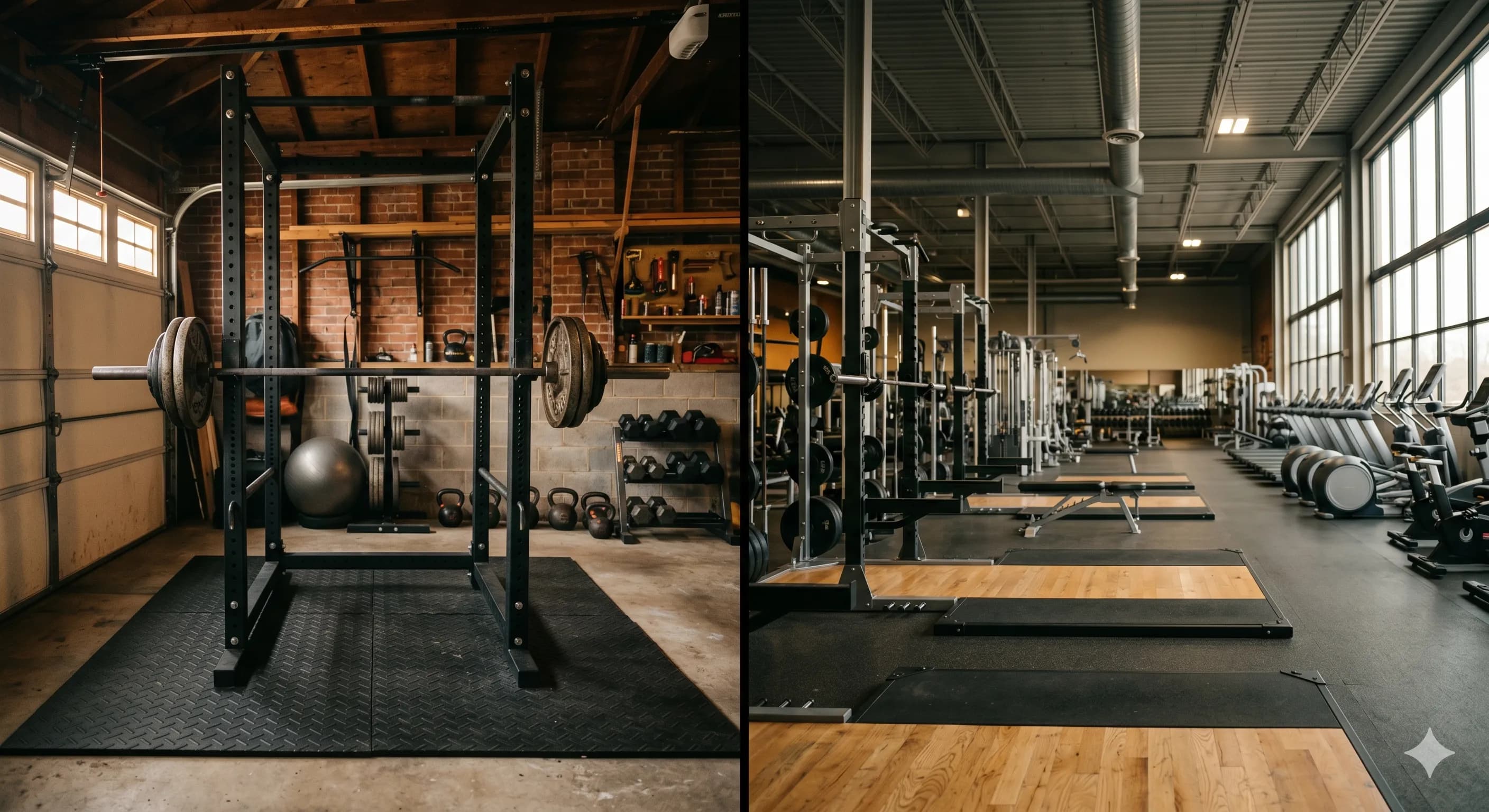
The home gym vs. commercial gym debate gets oversimplified. People act like one is universally better than the other, but the right answer depends on how you train, what you can afford, and how much space you have.
The case for a home gym
The appeal is obvious:
- No commute. Walk downstairs and start lifting.
- No waiting. The squat rack is always free.
- Your rules. Your music, your chalk, your timeline.
- One-time cost. After the initial investment, you're done paying monthly.
For a basic home setup (rack, barbell, bench, 300 lbs of plates) expect to spend $1,500–$3,000. That's roughly 2–4 years of a commercial gym membership.
The case for a commercial gym
But home gyms have real limitations:
- Equipment variety. You'll never match the cable machines, dumbbells up to 150 lbs, and specialty equipment of a well-equipped gym.
- Space. A proper setup needs a dedicated room or garage. Not everyone has that.
- Motivation. Some people genuinely train harder when they leave the house.
- Maintenance. Equipment wears out, and replacing a cable or bench pad costs real money.
- Social element. Training partners, classes, and community matter to a lot of people.
The hybrid approach
Many serious lifters do both: a home gym for the basics (squat, bench, deadlift) and a commercial gym membership for everything else. You hit the home gym on busy days or when time is short, and go to the commercial gym when you want variety or a training partner.
What to actually decide
Ask yourself:
- Do I have 100+ sq ft of dedicated space? If not, home gym is impractical.
- Do I need machines and cables regularly? If yes, commercial gym wins.
- Will I actually train at home? Be honest. The garage setup collecting dust is a real phenomenon.
- What's my budget? A quality home gym costs $2K+ upfront. A gym membership is $30–$80/month.
There's no wrong answer. Just the one that keeps you consistent.